
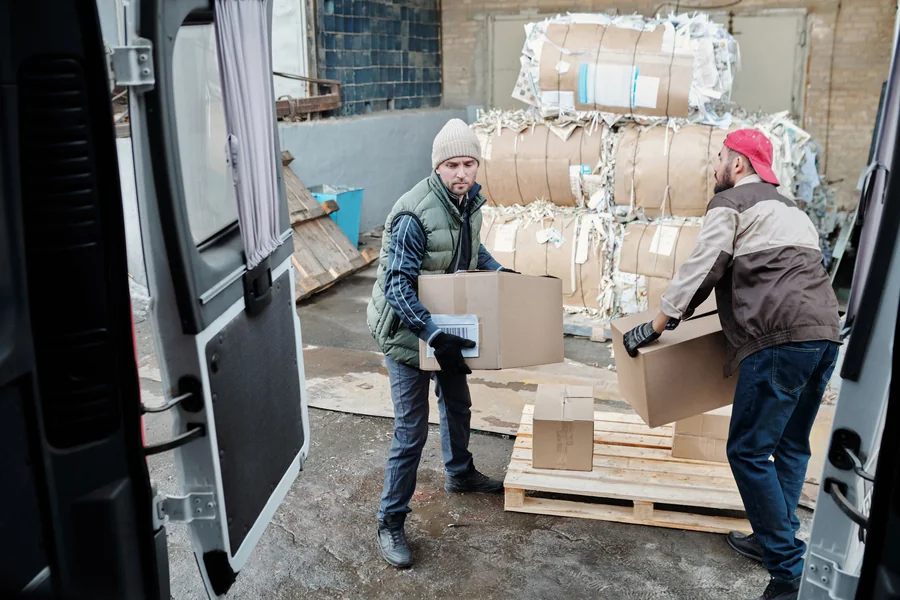

Every evening behind retail stores, stockrooms, and distribution hubs, the scene is remarkably similar: mountains of flattened shipping boxes stack up near loading docks. What seems like a simple daily housekeeping chore is actually a hidden operational bottleneck. Unmanaged corrugated packaging saps labor hours, consumes expensive floor space, and quietly drives up municipal waste collection bills.
Managing high volumes of packaging requires moving past conventional dumpsters and manual box-breaking. When employees spend valuable shift time cutting down boxes or trekking outside to overloaded bins, workplace productivity slows down. Installing an on-site cardboard baler directly at the point where waste is generated converts bulky, loose packaging into dense, stackable blocks in seconds.
By tackling waste at its source, businesses stop paying contractors to haul away containers full of trapped air. Instead, they build a leaner, cleaner workflow that supports both operational productivity and environmental targets.
The Operational Strain of Unmanaged Cardboard
As e-commerce demand and inventory turnover remain high, packaging volume continues to climb. Leaving that packaging uncompressed creates multiple friction points across daily operations.
Reclaiming Lost Stockroom Floor Space
In retail and logistics, every square meter of floor space carries a tangible cost. Overflowing bins and piles of uncompressed boxes clutter walkways, create fire hazards, and swallow space that could otherwise be used for inventory storage or staff movement. Modern machinery tailored by Mil-tek focuses on minimal footprints, allowing businesses to reclaim backroom real estate without interrupting stock handling.
Cutting Labor and Transport Inefficiencies
Breaking down heavy corrugated cardboard manually is labor-intensive and prone to causing repetitive strain injuries. It also forces staff away from core responsibilities like restocking shelves or fulfilling orders. When packaging is compacted automatically at the workstation, processing time drops significantly. Fewer trips to outdoor bins mean staff spend more time on activities that directly generate business value.
Turning Waste Management into a Revenue Stream
Beyond daily efficiency, compacting cardboard changes the financial math of waste management. Traditional waste management models rely on frequent collections of loose rubbish—a service priced by bin volume rather than weight.
When packaging is compressed into neat, mill-sized bales, the frequency of waste collections drops dramatically, cutting haulage fees and fuel surcharges. Furthermore, clean, segregated cardboard bales are a valuable recyclable commodity. Commercial recycling companies regularly pay for high-density bales, turning what used to be a major expense into a consistent revenue stream.
Adopting these practices also keeps companies compliant with evolving environmental regulations. Businesses must adhere to official GOV.UK commercial waste regulations regarding waste storage, duty of care, and recycling separation prior to disposal. Baling cardboard makes compliance simple and transparent.
Building Cleaner, Sustainable Workflows
Sustainability is no longer just a marketing slogan; it is an operational requirement. Compact systems provided by Mil-tek allow facilities of any size to divert tons of recyclable paper fibers away from landfills while reducing the carbon emissions associated with waste transport trucks.
By modernizing backroom waste processing, companies protect their bottom line, improve workplace safety, and take a practical step toward a truly circular economy.